Central Oregon Real Estate Market: September 2026. The Market of Margins
One of the age-old questions in any housing market is whether it’s a buyer’s market or a seller’s market. Who has the leverage?
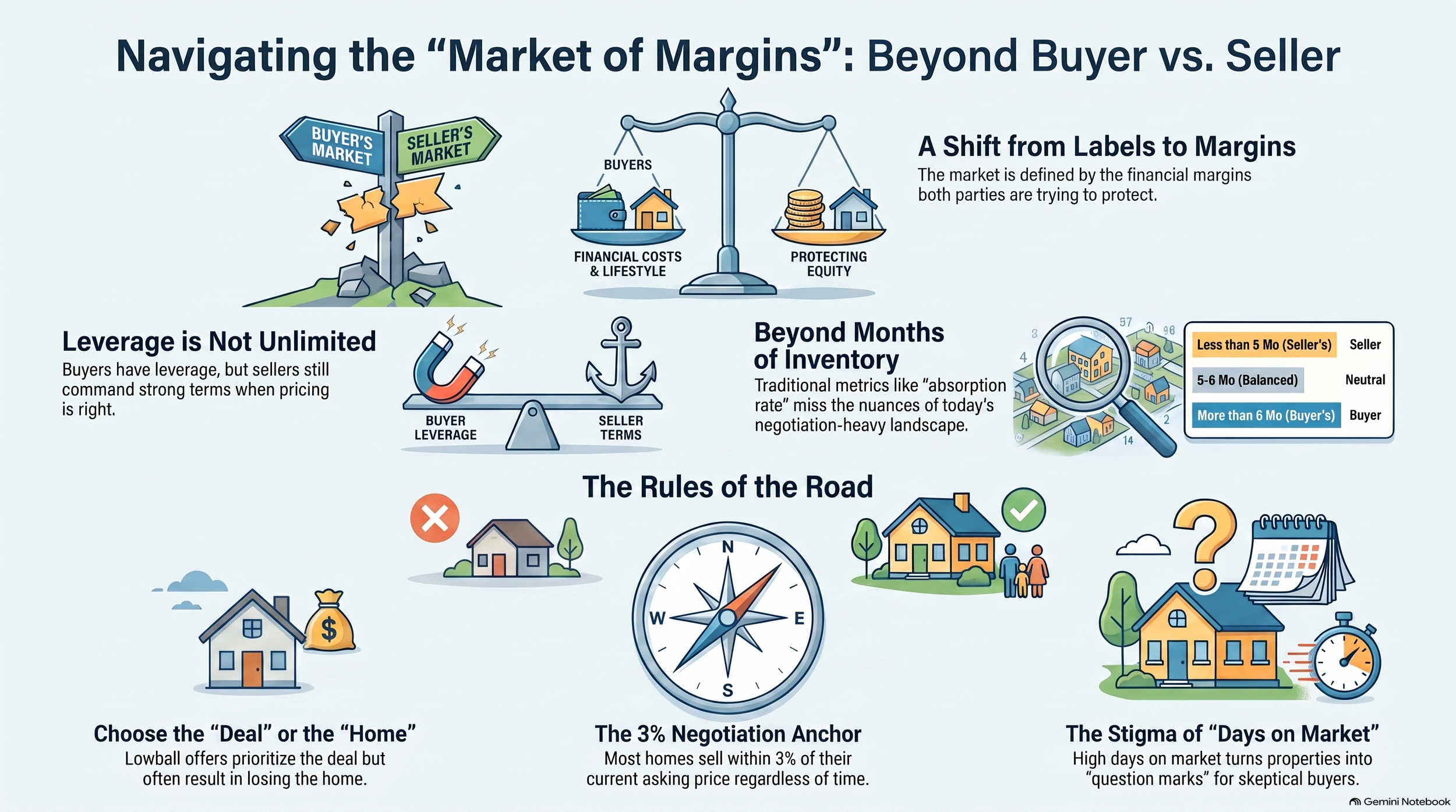
Sometimes the answer is easy. 2008 was an obvious buyer’s market. 2021 was certainly a seller’s market. When it’s not so clear-cut, the go-to statistic is usually months of inventory, also known as the absorption rate. Less than 5 months is generally considered a seller’s market, 5 to 6 months is balanced, and more than 6 months is a buyer’s market.
The problem over the last few years is that using months of inventory alone assumes the market is black and white, instead of acknowledging the shades of gray experienced by those working in it every day. If you follow the headlines or listen to the news, you’d probably conclude pretty quickly that this is a buyer’s market. And for the most part, you wouldn’t be wrong.
Except when you find out how many homes are still selling with multiple offers. Probably more than you think.
So instead of labeling this a buyer’s market or a seller’s market, I think there’s a better description for what we’re experiencing right now: a market of margins. Specifically, the financial margins buyers and sellers are trying to protect.
Buyers are evaluating homes and making offers based heavily on the financial cost, both today and in the future, along with the lifestyle the home provides. If those pieces don’t line up, they keep looking. Sellers, many of whom will become buyers themselves, are trying to preserve as much equity as possible to carry into their next purchase. Initial pricing and subsequent negotiations are increasingly centered around protecting that margin. Even sellers who need to sell aren’t looking to simply “give the house away.” They’re trying to protect as much of their financial position as they reasonably can.
At this point, there are four unspoken “rules of the road” I’m seeing play out over and over again:
You can go for the deal, or you can go for the home. If you want to throw out a lowball offer, that’s going for the deal. Just understand that you might not get the home.
If you want the home, understand when sellers are actually saying yes. Month over month, homes are selling within about 3% of their current asking price, regardless of how long they’ve been on the market.
You can’t underprice a home in any market, even this one. If a home is priced well for what it offers, buyers notice. And when enough buyers notice at the same time, multiple offers can still happen.
Days on market is a killer in any market, but especially this one. Before buyers ever physically walk through a home, a high number of days on market can turn even a great property into a question mark. Buyers start wondering what everyone else saw that they haven’t.
That’s what makes this a market of margins. Buyers have leverage, but not unlimited leverage. Sellers can still command strong terms, but only when the market supports them. Both sides are constantly deciding how much of their margin they’re willing to give up to get what they want.
Whether you’re actively buying or selling, or simply watching from the sidelines, I think this market makes a lot more sense when viewed through those four rules rather than a simple “buyer’s market” or “seller’s market” label.
And if you have questions, disagree with any of them, or have another “rule” you think belongs on the list, I’m always an email or phone call away.